
Outlawing metal mining in El Salvador - Policy Brief 18
This Policy Brief from TTP Associate Clare Cummings describes how a community-led campaign for ‘water over gold’ succeeded in banning metal mining in El Salvador.
In 2017, El Salvador passed a law that banned metal mining. In other countries in the region, mining continues to damage livelihoods and pollute water sources; in El Salvador, a community-led campaign for ‘water over gold’ succeeded.
This case study demonstrates how coalitions can bridge identity groups, how a problem can be framed to fit with popular political movements and how cultural identities can help mobilise people around environmental protection.
The following lessons from the anti-mining campaign’s success can inform politically aware programmes:
- Analyse the interests of the political elite, business leaders, rural communities and religious leaders. Understand their cultural identity, ideas and moral values.
- Build coalitions. Broaden support for your campaign to increase political pressure.
- Leverage international support.
- Frame your campaign within popular narratives and cultural values. Can key stakeholders be persuaded to see environmental protection differently?
- Lock it into law. Legislative change can send a strong message.

Political economy analysis for climate action - new course launched starting October 2024
The Policy Practice is delighted to be re-running the popular online course on Political Economy Analysis for Climate Action. This course explains how political economy analysis can be used to understand the challenge of action on climate change and to design more effective interventions. The course will consist of eight, 2-hour online sessions from 4 October to 12 November 2024. For more information and to register please click below or see our flyer here.

The political economy of energy transitions in Ghana, Zambia and Vietnam - Policy Brief 17
Written by Sam Bickersteth with Neil McCulloch and Meron Tesfamichael, this policy brief draws out some of the common constraints hindering the energy transition in Ghana, Zambia, and Vietnam and many other countries in the Global South. It also shows how political economy analysis can help to identify politically feasible pathways of change in each country demonstrating the importance of such analysis as an essential tool to understand energy transition.
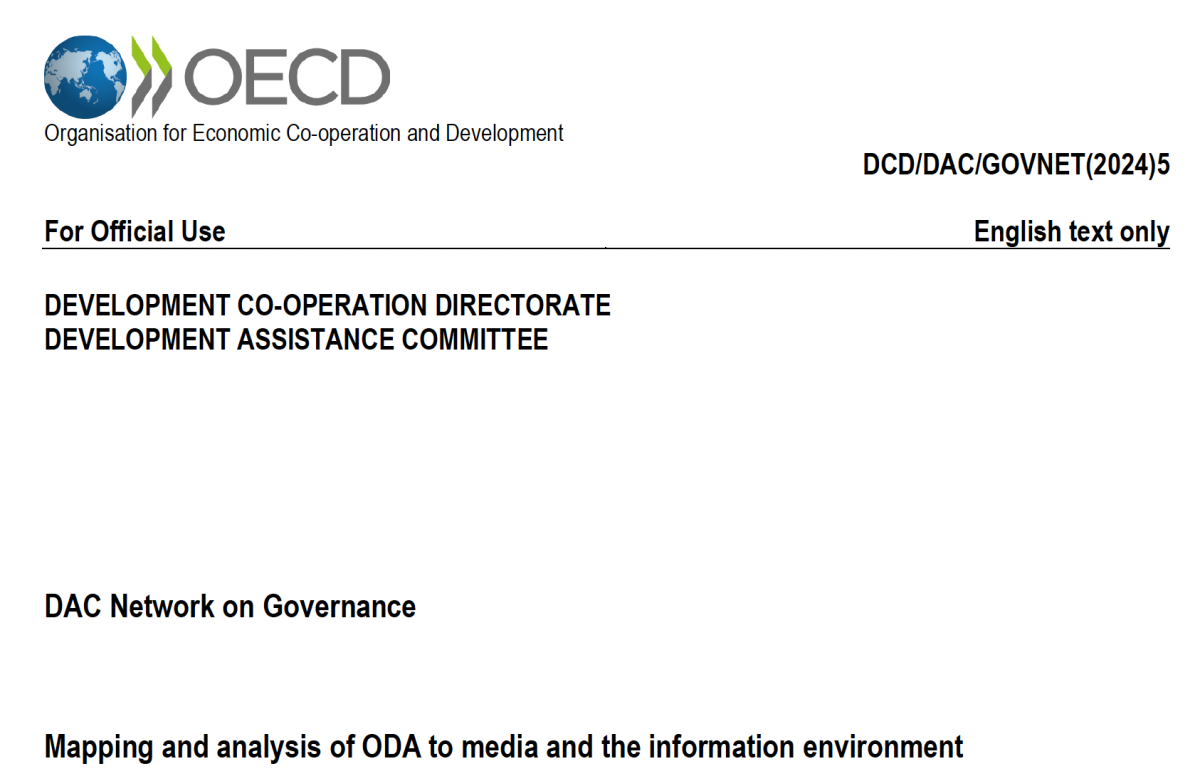
Media support: aid funding does not match donor rhetoric
Laure-Hélène Piron (TPP Director) presented her analysis of official development assistance to media and the information environment to the Governance Network of the OECD Development Assistance Committee on 6 March 2024.
The draft report shows that the rhetoric of governments which support freedom of expression and condemn disinformation is not matched by sufficient funding. And too little directly goes to local media organisations.